Plant biostimulants are products applied to plants with the aim of enhancing nutrition efficiency, abiotic stress tolerance and/or crop quality traits, regardless of their nutrient content. They are increasingly seen as essential tools for sustainable agriculture amid the challenges of climate change such as drought, excessive heat, land degradation, and other stresses reducing productivity. The global biostimulant market is therefore experiencing unprecedented growth, with global market value currently exceeding $3 billion and projected to triple within the next decade.
As the market expands, it is also becoming increasingly crowded. Across regions and crop types, manufacturers are launching new formulations at an overwhelming pace. Many of these products are superficially similar, promising incremental benefits without providing robust evidence to substantiate them, especially as regulatory frameworks in many jurisdictions are relatively less strict or non-existent.
In the current environment, differentiation has become critical, and the combination of scientific clarity, rigorous claims validation, and structured knowledge with technology transfer provides a clear path for market-level differentiation.
Scientific Clarity
Data demonstrating the mode of action (MoA) of biostimulants has historically not been rigorously enforced by regulators, even where it is formally required within existing regulatory frameworks. For example, the EU Fertilising Product Regulation (EU FPR) explicitly states that an EU fertilising product complies with a particular product function category (PFC) within the regulation shall be supported by the product’s mode of action (MoA). In practice, while applicants are generally required to submit efficacy data demonstrating that a product performs as claimed, enforcement of MoA substantiation has not been as stringent as the registration requirements applied to biopesticides.
In several U.S. states, neither the submission of efficacy data nor demonstration of mode of action is required at all. Nevertheless, one of the key trends from the 2025 Biostimulant World Congress held in Barcelona is that there is now a stronger push across the industry for demonstrating clear and defensible MoA. Growers and investors now expect more than selected efficacy data showing that a product works, they also need to understand how it works.
Achieving scientific clarity may involve identifying the specific biochemical or physiological pathways influenced, generating laboratory evidence of activity at the cellular or metabolic level, validating agronomic relevance through well-designed field trials under defined conditions, and ensuring alignment between claimed benefits and demonstrated mechanisms. One example of a clearly articulated MoA is Trehalose-6-phosphate (T6P) technology from SugaRox, which enhances yield and resilience through targeted intervention in plant sugar signaling pathways.
While not all companies have the resources or technical capacity to exhaustively characterize modes of action, even foundational mechanistic data can significantly strengthen credibility with growers, agronomic advisors, investors, and regulators. Scientific clarity can also reduce misuse. For instance, a product designed to enhance stress tolerance may not deliver measurable benefits under optimal growing conditions, but without mechanistic understanding, such context-dependent performance may be misinterpreted as product failure rather than a limitation of use conditions.
Clear articulation of the science underpinning a biostimulant technology is therefore not only a regulatory consideration but also a powerful commercial and technical differentiator.
Rigorous Claims Validation
Besides substantiating mode of action, claims must be rigorously validated under controlled and field conditions. As the biostimulant market matures, stakeholders are demanding multi-location, multi-season field data that demonstrate consistent performance across diverse agroecological environments. Selective positive results or marginal, statistically weak yield gains are not sufficient to build stakeholder confidence.
Robust validation requires moving beyond anecdotal or opportunistic trials toward structured efficacy frameworks. Depending on the product and its intended use, this may involve conducting trials across different climatic zones, soil types, and crop varieties, and testing performance under clearly defined stress conditions where relevant. It may also require measuring physiological and biochemical indicators in addition to yields, designing experiments with adequate replication and appropriate controls, and applying transparent, statistically sound analytical methods. These elements should be embedded at the trial design and planning stage rather than addressed retrospectively. Investors, in particular, are increasingly scrutinizing experimental design, statistical power, and reproducibility during technical due diligence, before committing capital. At the same time, investors must recognize the season timing required to generate powerful field performance data. The movement from scoping through early and late development stages is not easily rushed to successful commercialization.
Furthermore, data generated exclusively through internal research and development programs, even when scientifically robust, may be perceived as commercially biased. As a result, many major investors, distribution partners, and sophisticated growers now place greater emphasis on independent, third-party validation of product performance claims. Verification through universities, accredited research institutes, or reputable consultancies can provide a level of credibility that internal trials alone often cannot achieve.
Investing in a rigorous claim validation framework demonstrates a disciplined, evidence-driven culture. It signals scientific integrity to investors, distribution partners, growers, and regulators, and can serve as a meaningful commercial and technical differentiator in an increasingly competitive marketplace.
Structured Technology and Knowledge Transfer
A recent farmer survey highlights the need for effective knowledge transfer to fully understand the benefits and application of biostimulants. Even scientifically sound and rigorously validated products can underperform commercially if agronomic understanding is inadequate.
Performance of biostimulant products is inherently context-dependent, and their effectiveness is influenced by complex varying factors such as crop development stage, environmental stress timing, soil conditions, tank-mix compatibility, irrigation strategy, and broader crop management systems. Misapplication leads to inconsistent results, which can undermine even the strongest product. Structured knowledge and technology transfer ensures that validated science translates into reliable farm outcomes.
Before taking biostimulant products to the market, companies must ensure that understanding of the product function and use is harmonized internally. For example, relevant members of R&D, regulatory, marketing, and commercial teams must share a unified understanding of key aspects such as mode of action, optimal timing windows, stress thresholds for effective use, limitations or non-responsive scenarios, and compatible agronomic programs. Misalignment at this stage often results in overpromising or inconsistent messaging downstream.
Additionally, as distributors and agronomists are the primary translators of product science into farm practice, it is important to ensure that they are equipped with a full understanding of the product to avoid on-farm misapplication and inconsistent performance. Technology Transfer requires ongoing education and continual local experience. Companies may support their new product launches with complementary initiatives such as modular technical certification courses, stress physiology workshops, application timing simulations, development of region-specific agronomic manuals, and clear functional positioning frameworks for their biostimulant technology.
Farmers operate under complex and time-pressured conditions. Structured knowledge transfer must therefore simplify decision making without diluting the underlying biological complexity of the product. Practical decision support tools such as crop stage specific application charts, stress window identification guides, integration protocols with fertilizers and crop protection inputs, and economic return calculators enable faster and more consistent decisions. In doing so, they not only improve product performance outcomes but also create a sustainable competitive advantage.
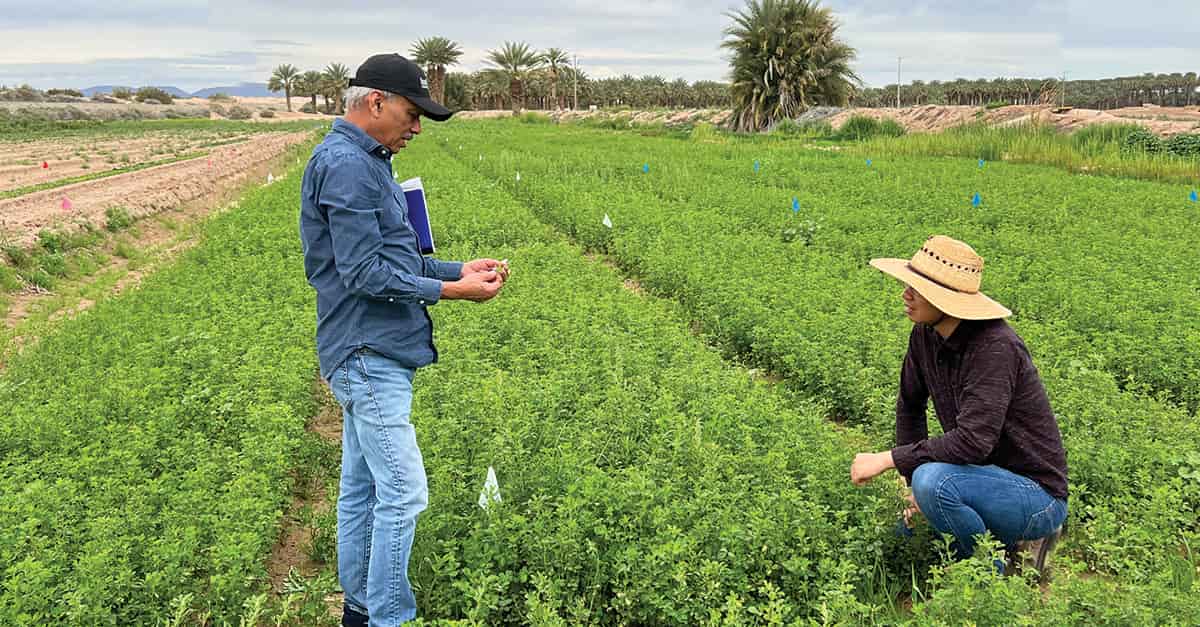
Furthermore, regional demonstration plots and farmer-led participatory trials help translate generalized data into locally relevant experience. When farmers observe performance under their own environmental conditions, adoption barriers decrease significantly. Demonstrations should reflect realistic stress scenarios rather than optimized showcase conditions. However, taking products to farmers’ trials too early can risk first-use failure. It is important to do adequate trials before going to the farmer to ensure they have good experience with the product the first time.
Regional demonstration plots and farmer-led participatory trials are critical for translating general data into locally relevant experience. When farmers see product performance under their own environmental conditions, adoption barriers decline significantly. Demonstrations should reflect realistic stress scenarios rather than optimized showcase conditions.
Equally important is ensuring that the process is not one directional. Structured feedback systems that capture farmer performance insights are essential, both to inform ongoing product refinement and to strengthen trust between farmers and manufacturers.
Closing Thoughts
In an increasingly saturated biostimulant market, amplified marketing claims will not help differentiate products. True differentiation can be achieved through disciplined scientific positioning with clear and coherent commercial execution. Combining credible mode-of-action clarity, rigorously designed and independently validated field performance data, and structured knowledge transfer frameworks position companies for a competitive edge and long-term relevance. As regulatory expectations evolve and technical due diligence by investors and partners intensifies, evidence-based positioning will increasingly distinguish robust technologies from opportunistic formulations. Ultimately, consistent on-farm performance will determine market share and longevity. Alignment of scientific integrity, validated efficacy, and practical agronomic guidance will drive biostimulant products’ transition from supplementary inputs to strategically integrated tools within resilient production systems.
How AgriThority Can Help
AgriThority® brings strategic, scientific and commercial expertise to help you differentiate your biostimulant products in a crowded marketplace. Our StatWerx™ analytics transform raw performance data into actionable insights and best-management practices, improving technical positioning and credibility for growers and investors. Our TrialWerx® platform extends large-scale, on-farm trials into robust performance evidence across environments, reducing risk and clarifying where and how your product works. Coupled with tailored technology transfer initiatives, training and go-to-market support, AgriThority® accelerates product development from early concepts through global launch, enabling meaningful differentiation, stronger market confidence, and sustained commercial success.